A trench and bunker of the Israeli Bar-Lev Line. November 1970
Background
During the Six-Day War of June 1967, Israel captured the Sinai Peninsula and the eastern bank of the Suez Canal from Egypt. Under the leadership of Chief of Staff Chaim Bar-Lev, the Israeli Defense Forces initiated the construction of a fortified defensive line along the canal's eastern bank, known as the Bar-Lev Line. Construction commenced in late 1968 and was completed by March 1969.[1]
Please partner with us in sharing Torah's guidance for enduring peace in Israel.
The IDF leadership believed that the Bar-Lev Line would delay an enemy attack until reinforcements could arrive. This was part of a broader post-Six Day War strategy, in which Israel shifted from an offensive to a defensive posture, acting on the premise that it no longer needed to assume an offensive posture, but could allow future conflicts to reach IDF positions.[2]
Shortcomings
Bar-Lev’s strategy faced internal opposition from several military leaders, notably Major General Ariel Sharon, who advocated for a more flexible and mobile defense approach, warning that a static fortification like the Bar-Lev Line would be vulnerable in the event of a large-scale assault.[3]
Sharon later recalled:
Several years before the Yom Kippur War, there was a bitter debate within the Israeli army regarding the Bar-Lev Line. The Rebbe knew about it, and he sent me a letter describing the terrible damage and tragedy that the Bar-Lev Line could bring. He analyzed the situation as a military expert, assessing what will happen. As a matter of fact, during the Yom Kippur War, that happened. It was a tragedy, but it happened.[4]
On August 20, 1970, less than two weeks after the signing of the ceasefire agreement that concluded the War of Attrition,[5] the Rebbe addressed a letter to Ariel Sharon:
I hesitate to say this. However, perhaps it is not merely a “concern” but a sort-of hope [so I will share the thought: Hopefully, as it was at the start of the Six-Day War, when the other side made a foolish move, that necessitated breaking the ceasefire. When that happens, with G-d’s help, there will again be miracles and wonders, and within the shortest possible time after the ceasefire is broken and defense resumed—the only way to defend, being through offense—all forces will be fully mobilized, not in a half-hearted manner as before, but with true defense.
Ariel Sharon at a Bar Mitzvah celebration in Kfar Chabad 12/25/1970 by Levi Freidin (C) JEMThen there is hope that a ceasefire will be implemented in a lasting manner, and we may finally achieve peace. The current situation, as mentioned above, leads directly to a renewed war, G-d forbid, but under conditions far worse than those of the day the ceasefire was entered.
I elaborate on this in response to your comment that my remarks about the fact that my correspondence about the canal, etc., are no longer relevant. I fear that, before long, these issues will become relevant once again. I hope I am mistaken in this assessment, and that events will prove otherwise. However, given the current trajectory, this does not seem likely.[6]
The Rebbe continued to warn Israel’s leaders about the flaws of the Bar-Lev Line. Writing to the Director of Israel’s Military Intelligence (AMAN), Aharon Yariv, on August 24, 1971, the Rebbe explained:
I will take the liberty, since you have touched on the issue of the ceasefire agreement, to ask the following:
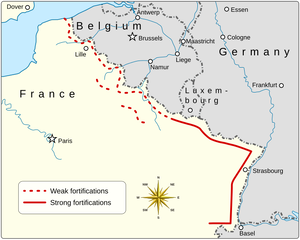
Maginot LinePerhaps you can clarify a question that has been perplexing me for nearly three years. It is well known and universally accepted among all military experts without exception that in our era, a defensive strategy based on fortifications—such as the Maginot Line—or on the presence of a military company operating under physical constraints and immobilization, military units in bunkers, etc. is entirely outdated in modern warfare, the era of jets and paratroopers.
This is even more relevant when considering a front that spans several hundred kilometers, including both the Suez Canal and the Mediterranean front. In modern warfare, military strength is seen in mobility and in the ability to rapidly redeploy forces from one location to another.
This principle holds even in cases where defensive positions exist in advantageous natural terrain, such as mountains and hills located behind the line—how much more so when operating in the desert. Even if the defensive line extends several kilometers in depth, certainly the minimal requirements of the [military standstill zone agreed to in the] ceasefire agreement would certainly exceed this depth.
And despite all these shortcomings, an enormous amount of money and immense efforts were invested in this defensive line.
True, there was some psychological benefit in that it helped those stationed there avoid boredom, which is a very serious issue in such circumstances, but it is implausible to say that this was the decisive factor in building the line.[7]
The Line’s Failure
The vulnerability of the Bar-Lev Line became evident at the outset of the Yom Kippur War, when Egyptian forces launched a coordinated assault, crossing the Suez Canal and breaching Israeli defenses. The fortifications of the Bar-Lev Line were quickly overrun, resulting in significant Israeli casualties, and a protracted and large-scale counteroffensive was required to push the Egyptians back over the canal.[8]
In a November 1973 address, the Rebbe further emphasized the obvious strategic fallacies of the Bar-Lev Line, and described the fact that the Egyptians did not advance into Jerusalem and Tel Aviv as a miracle:
Anyone who was in France during World War II (or anyone who has studied that period) knows that the French built a heavily fortified defensive line, incomparably stronger than the one in Sinai. And when the Germans concentrated all their armored forces and broke through at a specific point (as happened in that war), the French were completely thrown off, allowing the Germans to break through and reach the sea, conquering all of France in a single day (though it took a few more days to fully complete the occupation).
Everyone knows this, especially those who study military tactics, who are taught first and foremost about World War II—and so, by natural reasoning, Egypt could have done the same, Heaven forbid.
What's more, to conquer France, the Germans had to pass through several cities, each with its own defenses. But in this case, the area in front of the Egyptian army was just desert, with no settlements, and only a few soldiers and tanks, which wouldn't have been able to stop the advancing forces. Everyone at the time was aware of this. And yet, in reality, the Arab forces stopped in their tracks and didn’t continue their advance—solely because this was God's will. This was an open miracle, defying this world's natural order.[9]
Comparisons to the Maginot Line
There are varying opinions on whether the Rebbe himself personally visited the Maginot Line while living in Paris.
Other Mentions
List additional letters, Sichos, etc., from the Rebbe on this subject, with links.